Beyond the Battlefield: How Military Experience Translates to Strategic PR
From a Navy Lieutenant to a PR Leader
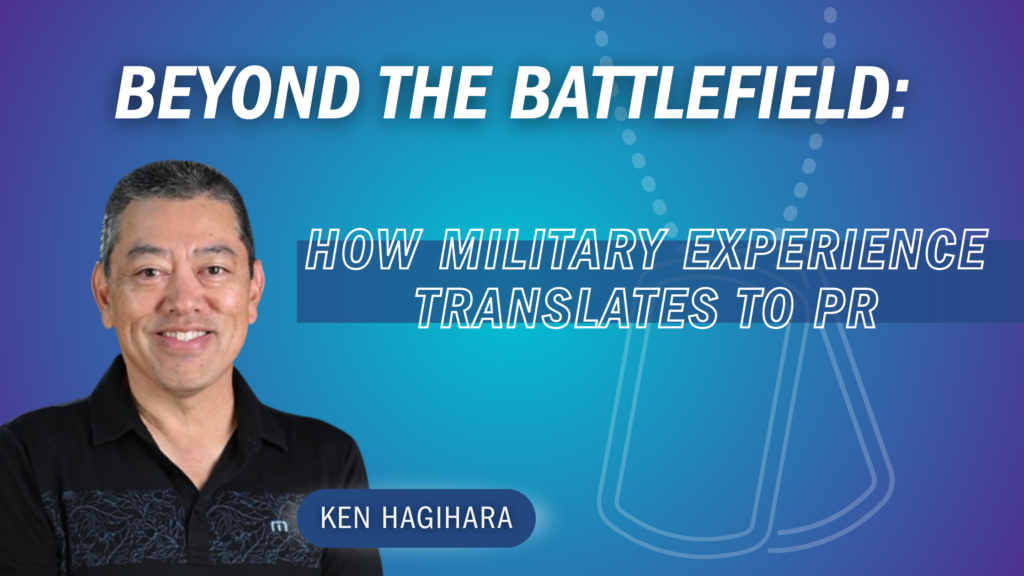
Public relations is a magnet, attracting the public eye and drawing students and professionals from diverse backgrounds. For some, the transition to PR is straightforward. For others, it is a shift from a field that, at first glance, may seem unrelated. A real-life example of such a dramatic transition is APR, Fellow PRSA and Navy Veteran Ken Hagihara, founder and president of Integrity Public Relations, Inc. and full-time lecturer in the Department of Communications at California State University, Fullerton.
Hagihara’s path to strategic PR is shaped by his long military service and years of experience in communications and technical fields. In this interview, he shared how his military background prepared him for success in strategic communications and how future PR professionals can apply similar principles to their own careers.
From Military Sciences to Public Relations
Before entering the communications field, Hagihara served in various roles in the military. He retired from the United States Navy in 2020 as a lieutenant commander and built a career as a public affairs officer specializing in Navy outreach and executive engagements. Earlier in his career, he worked as a satellite communication technician for the United States Air Force and the California National Guard.
1. What initially attracted you to the public relations field after a background in military sciences?
Ken Hagihara: “So I served in the Air Force for a while. When I was serving in the Air Force, and I was a satellite communications technician, my boss came in to me one day and asked what I was going to do with my life. I told him I was going to be a really good satellite communications technician for the Air Force for the rest of my life, and he said that was a dumb idea.”
His boss urged him to go back to school.
Ken Hagihara: “He said you need to go to school, you need to finish your degree. So he offered to give me time to go back to school, and I re-enrolled in college and picked communications because it took the fewest number of units. I knew how to write, so I figured, well, that’ll be the easy route. And so as I was going through the program and taking my PR courses, I realized that I really liked it. I got my degree in communications with a PR emphasis and entered the public relations field at that point. So that’s kind of how I got there. It wasn’t because of the military service, but my commander, the major, kind of made me go back to school.”
2. How did your military experience, particularly leadership or strategic planning, influence your decision to pursue communications?
Ken Hagihara: “When I was in the Air Force, I led a work center of four or five persons where we could deploy communications equipment out anywhere in the world. Doing that, you had to be a good communicator. I had to communicate with headquarters, with the Marines, and with my people. Communication was a big deal—knowing how to write, knowing how to speak, and convey information. And so that prepared me for what I do now as a PR person and in public affairs as a Navy person, understanding who my audiences are and what they need from me.”
3. What was the biggest surprise or misconception you encountered when transitioning from a military background?
Ken Hagihara: “I guess I would say that communications and working with civilians and folks like that is very unstructured. It required you to think a lot more creatively about how to get messages across. On the military side, it was very structured. I knew what information I had to pass on through the various channels to different audiences, to my command and to the public. Learning that in the civilian world, there are so many different types of audiences and the way they communicate… I had to be very creative about how I did that. They didn’t have to pay attention to me anymore.”
4. What specific skills from your military sciences background have you found most valuable in PR?
Ken Hagihara: “I think about the writing aspect—having to be very clear about what I communicate. It’s not about the number of words; it’s what you say and how you say it. It’s making sense to your audience, whether it’s troops I’m in charge of or officers that I report to. That structured aspect has been valuable.”
5. How do discipline, strategic thinking, or rapid decision-making from your military service apply to daily PR tasks?
Ken Hagihara: “Stuff in the corporate world moves fast, crises move fast and when a client hires you to handle their PR, they expect you to think clearly and quickly. When something happens, a crisis happens, or a marketing director has an issue, I have to think quickly about what the ramifications are. On the public affairs side for the Navy, I was always a worst-case-scenario kind of public relations thinker.”
6. Can you provide an example of using a military-developed skill to solve a communications challenge?
Ken Hagihara: “In the Navy, when something happened—an incident with a ship bumping into another ship—we would put out a press release or media alert immediately. The reason we do that is because we control the narrative. If an influencer finds out and reports first, anything we do afterward puts us on the defensive.”
He described a similar situation with a corporate client whose product had a safety issue. Hagihara worked quickly to gather information, issue a statement, alert trusted media, and provide a fix before harm occurred—maintaining public trust by acting early and transparently.
7. How do you explain the communications profession to someone from a vastly different background, such as military sciences?
Ken Hagihara: “Most people don’t buy a car because of an ad. They look at reviews, influencers, third-party organizations—people they trust. That’s what PR is about: getting other people to say good things about our products or brand. For CEOs or engineers who don’t understand PR, that’s how I explain it.”
He added that the rise of influencers shifted companies from advertising-first strategies to PR-first strategies, because credible reviews drive results more effectively than paid content.
8. What are some common misunderstandings about public relations?
Ken Hagihara: “Clients think that it’s advertising. They think we can control everything someone says. We can’t. If what someone writes is factually true, we deal with it. Advertising lets you control the message—but that’s why it’s less credible. PR works because people know I have no control over what the person writes.”
9. In your experience, how does the structured environment of military sciences compare to the dynamic landscape of PR?
Ken Hagihara: “The military has a very structured approach. Our bosses from the Pentagon decide how we say things and what we can say. On the civilian side, we can be creative and move quickly. When something is happening, we can take advantage of trends, new technologies, new platforms—things you can’t necessarily do in the military environment.”
He explained that in civilian PR, approvals can take seconds. In the military, approval processes can take days or even a week, limiting responsiveness.
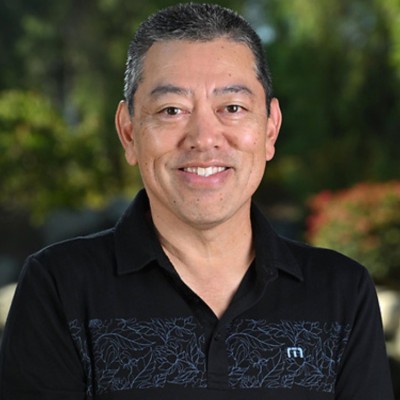
Ken Hagihara is a full-time lecturer in the CSUF College of Communications and is the president of Integrity Public Relations, Inc., a public relations agency serving technology companies and nonprofit organizations. A member of the Public Relations Society of America (PRSA) College of Fellows, Ken contributes to the global public relations profession through leadership roles including service on the Universal Accreditation Board and Public Relations Student Society of America (PRSSA) Advisory Council. A retired Navy public affairs officer, he also serves on the board of the Pacific Battleship Center and is the outreach committee lead for the annual Los Angeles Fleet Week. Ken holds a bachelor’s degree in communications from California State University, Fullerton, and a master’s in communication management from the University of Southern California.
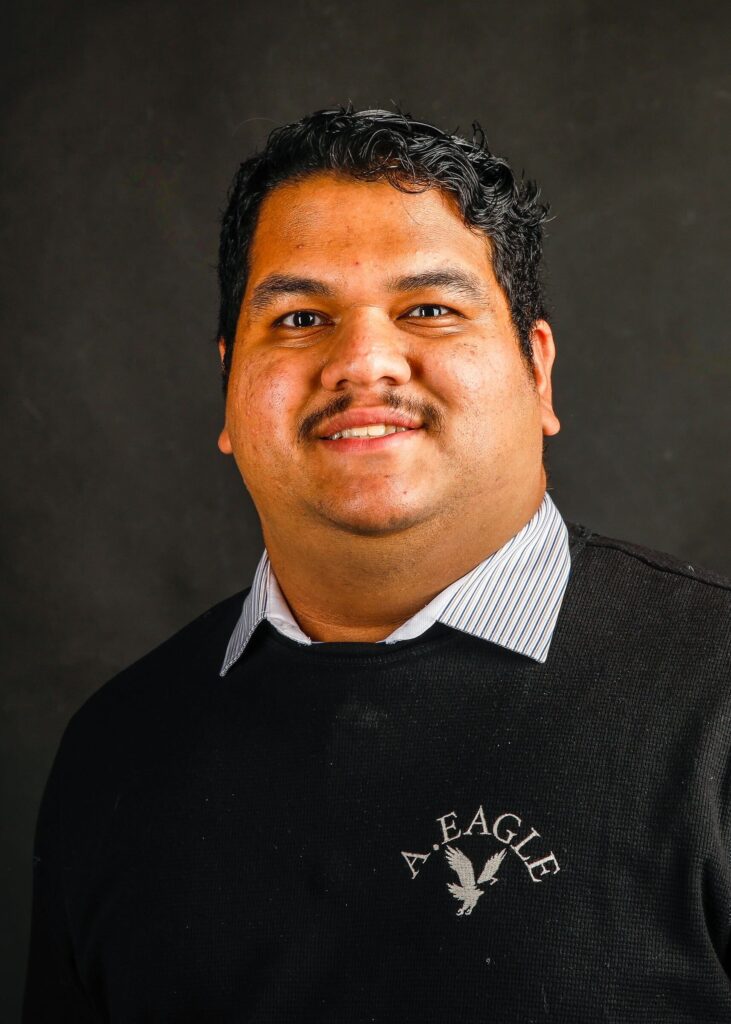
Nathan Gomes is a senior at the University of Central Oklahoma majoring in Strategic Communications with a minor in Mass Communication. He has been a member of UCO’s PRSSA chapter since 2024 and is a member of the PRSSA PRoud Council Subcommittee. He is a contributing writer for The Vista, one of Oklahoma’s oldest university newspapers, and interns with the Oklahoma Journalism Hall of Fame and Museum, focusing on artifact curation, storytelling, and public engagement.
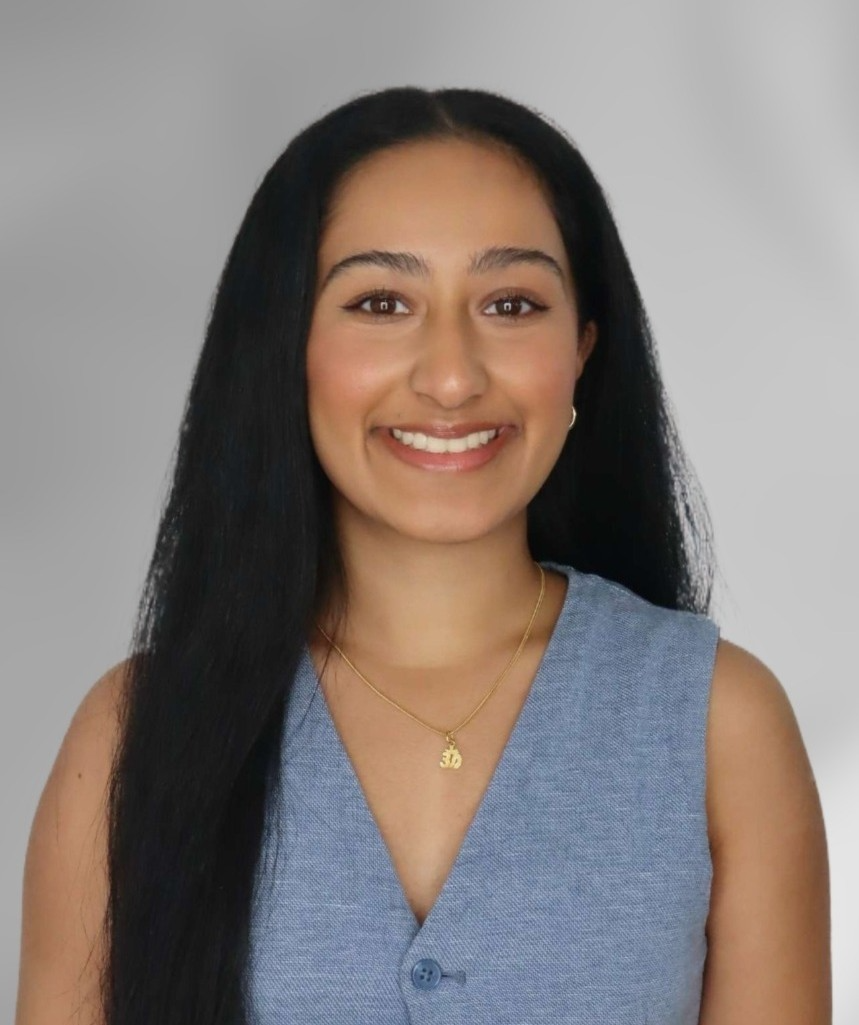
Diya Patel is a third-year senior at Kennesaw State University, majoring in Public Relations with a concentration in international affairs. She has been involved in her local PRSSA Chapter since the fall of 2024. From writing, to national award-winning applications, to planning PRSSA events, writing blog posts or even being a part of the PRSSA PRoud Council Subcommittee, she loves being part of PRSSA. Outside of PRSSA, she is the Director of Public Relations with her university’s student government association, and is slowly making her mark through her passion and love for public relations in this industry.