Cold Calling Craziness: How to Get Internships to Notice
Internships are hard to get. That is no secret. As a sophomore concluding my spring semester, I was desperate for an internship, something that seemed so close yet so far from my grasp. By the time I finally got accepted at a Pittsburgh creative agency, I had applied to at least 75 internships, if not more. As with everything in PR, getting the prized internship can feel like an uphill battle, but my goal with this article is to share a few practical tips to make things easier.
The first mistake I made —and the one I see most people make — is an overreliance on LinkedIn and other job-hunting sites. LinkedIn profiles are an excellent tool for any young professional, especially for making connections, but LinkedIn job postings can be misleading and, at times, outdated. LinkedIn job postings are neither consistent nor helpful, and, in my opinion, are useful for no more than scouting out internships. Instead, use those postings to identify potential connections at the hiring organizations and reach out to them to ask questions. This is especially useful with smaller organizations that may actively monitor LinkedIn.
One strategy I employed to build connections was cold calling and filling out contact forms at various agencies. While responses were inconsistent, several of the interviews I secured came from cold-calling agencies or businesses. If it went to voicemail, I would share my name, college information and contact information before inquiring about internships. Before each call, I would research the organization to ensure I was interested in working for them.
On the topic of outreach, a strategy that was incredibly helpful to me and got me multiple interviews was using the Champions for PRSSA. The Champions are professionals who sign up to serve as mentors to students and will respond when contacted. These individuals can help with anything from resume proofing and career advice to internship acquisition and PR strategy. While not every city has Champions, these individuals are incredibly well-connected and may be able to provide contacts outside of their geographical location. My advice when interacting with Champions is to reach out, introduce yourself, share a bit of your background and explain precisely why you are asking for their help. When connecting with a Champion, it’s important to be prepared, professional and friendly. While it’s important to be direct, never underestimate the power of getting to know a willing mentor. Going into the conversation, know what type of internship you are looking for — whether virtual or in person — and how comfortable you are with travelling for it.
While the majority of my internship experiences have been focused on agencies, there are also ripe opportunities in the corporate and nonprofit sectors. While the same principles apply for these categories, many businesses do not post their job opportunities on job sites, meaning the places to look are their career webpages. The same goes for local nonprofits, which may not even have websites on which to post hiring information. Not all of these opportunities are paid, but most nonprofits will gladly accept help from a young professional, as they often have limited resources and staffing. Local nonprofits present excellent opportunities for young professionals to craft roles for themselves, all while producing work that can be featured in their portfolios. In my case, I got to pick many of the projects I worked on, and while I made mistakes (many, many mistakes), my clients were incredibly forgiving, as I was working for free.
If you are seeking organized client work, an excellent way to build your portfolio is to join your PRSSA Chapter’s Student-run Firm. If your Chapter has an active Student-run Firm, get involved as soon as you can. As a former firm director, I can say that firms are among the best ways to gain real experience working with clients and crafting deliverables. Larger colleges may even have “hiring” processes to get involved with their firms, which are excellent ways to practice interview skills and an opportunity to improve your resume.
Another piece of advice for gaining work experience came from a PRSA mentor, who told me to think strategically about every class assignment because,“You never know what you can include in your portfolio.” In my sophomore year, I took this advice to heart and transformed the assignments from my PR Research class into portfolio material by partnering with campus organizations and local nonprofits. As a result, I had deliverables for my “clients” that could influence their brand strategy. To this day, I strive to treat every assignment as a potential portfolio piece, which has given me a handy body of work to pull from when drafting my ‘hire me’ materials.
My last bit of advice for drafting resumes and portfolios, coming from another PRSA mentor, is to quantify every experience. The industry has shifted away from venerating titles and flowery, vague descriptions. Percentages, numbers, and data are the norm now, none of which can be faked with a ChatGPT prompt. There is a reason PRSSA focuses so much on research and reporting; a great campaign or social post means nothing if it lacks the figures to back up its effectiveness. So, whenever you are getting real PR experience, make sure to always ask yourself, “How am I going to measure this?”
These are some tips and tricks I’ve learned over the past few years that have helped as I attempt to break into the field. These tips do not change the fact that internships are hard to get, but the best thing you can do is continue applying. Continue searching, because your next role is out there. It is just up to you to find it.

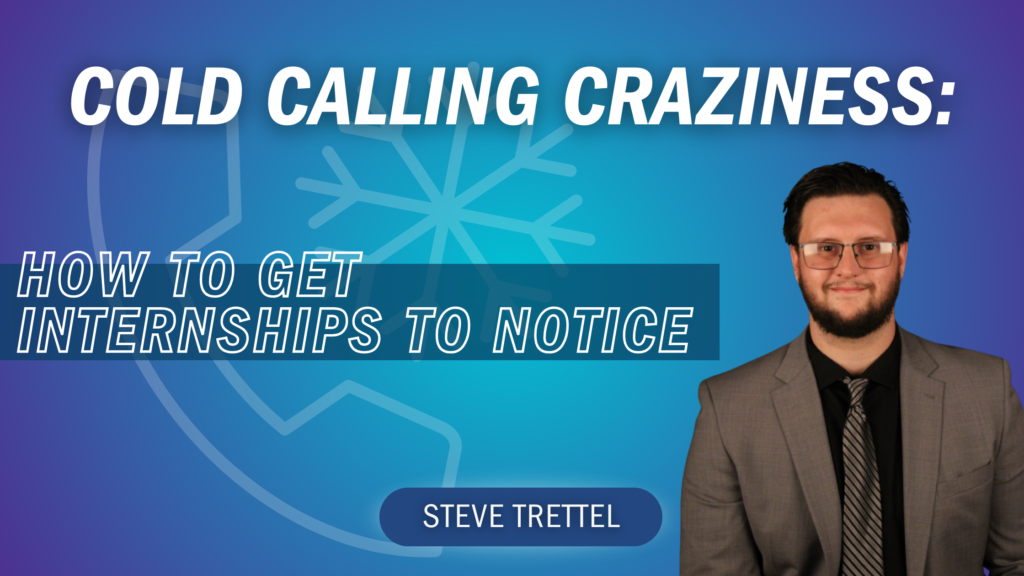
Steve Trettel is a PRSSA publications subcommittee member and a junior public relations and journalism double major at Waynesburg University. Steve currently serves as the executive administrator for his Chapter as well as an account manager at Red Brick Communications, Waynesburg’s Student-run Firm. He has just completed his internship at Flying Scooter Productions and plans to pursue agency work after graduation.