The Art of Personalization: How to Recruit Non-Majors
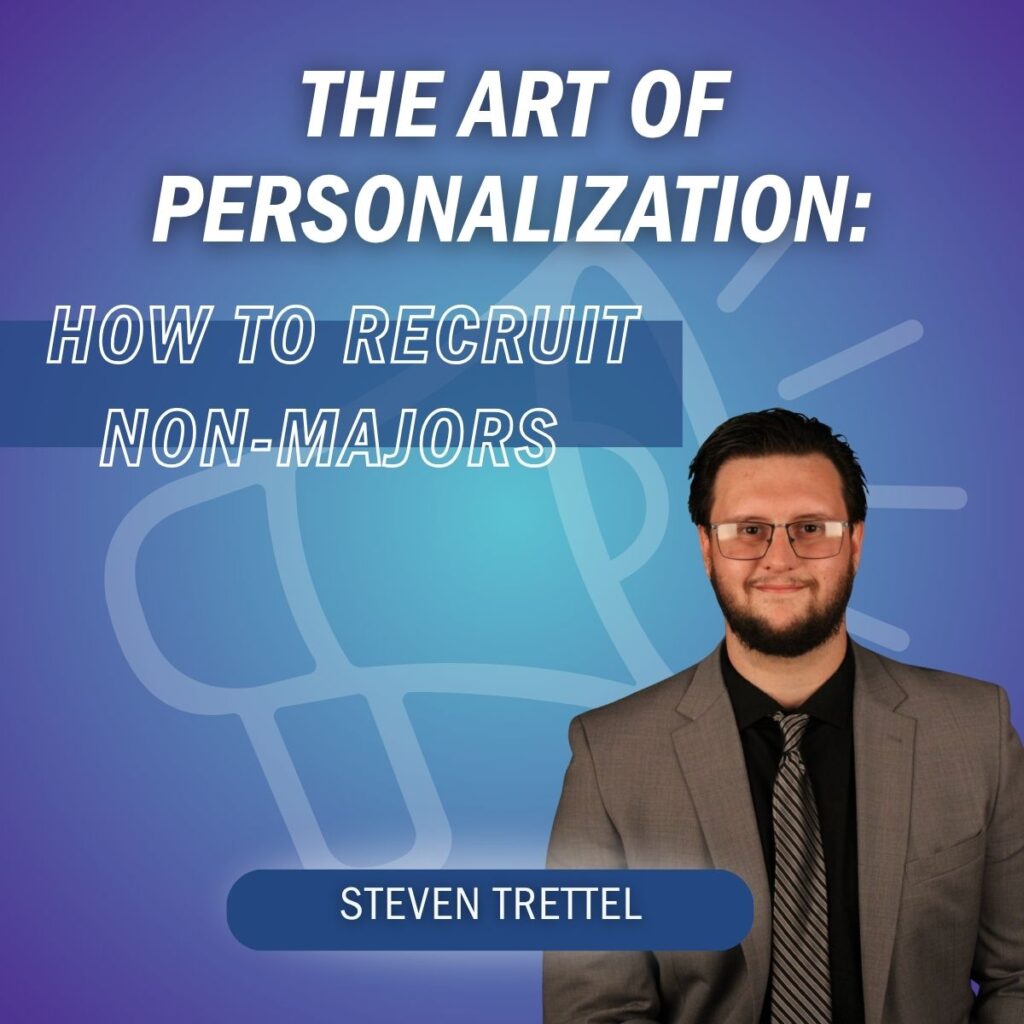
I began my sophomore year as vice president of Waynesburg University’s PRSSA Chapter, inheriting this position after COVID-19 ravaged our Chapter. To say Waynesburg’s interest in PR was limited would have been the understatement of the century. At the time, our PR program only had six full majors, including myself. Our Chapter barely had 10 active members, and our Student-run Firm had dropped to a single client. Being handed the keys to the Chapter felt like being handed the keys to a car that was already on fire, knowing I had to drive it to work the next day; the keys were on fire, too.
Together with our Chapter president and our other executive board members, drive we did. We pulled together recruitment campaigns, implemented new initiatives and attempted to bring PRSSA back to life. Now, a year and a half out from that moment, I can say that we succeeded. Our Chapter currently has 25 active members. Our firm has four clients, and we consistently recruit new members each semester. While I cannot claim to be an expert in recruitment, I can say I learned a few lessons that completely changed my perception of it.
The first lesson that drove this change, I learned during 2024’s ICON Leadership Luncheon. I was speaking to another student, Celeste D’Andrea, who has since graduated, and was explaining our Chapter’s recruitment struggles. Initially, my approach was to answer the question “What is PR?” with statements that began with “PR is …” Thankfully, she emphatically told me that this approach would never work. She shared that to get non-majors interested, recruiters need to “make it real” to them.
We started small, recruiting other students in WU’s Department of Communication. We began to pitch PR as it pertained to their majors, an auxiliary program that could help them be better in their own pursuits. For journalists, we pitched PR classes providing an insight into the mind of a media relations coordinator. For sports broadcasting, we connected it to securing paid, earned, shared and owned coverage through storytelling.
We also worked with our adviser to open PRSSA membership as a one-credit, pass/fail workshop. Many students are uninterested in PR because they do not understand how it applies to them. The purpose of outreach is to help them learn how. As a result, we gained 15 new members over the course of the semester, all of whom had also signed up for accounts with Red Brick Communications, our nationally affiliated Student-run Firm.
We eventually pitched this to non-communications majors whose fields of study overlapped with ours, including political science, English, nursing, marketing and business management majors, using examples from their fields to illustrate their connection to PR.
Another way we recruited members was through our annual PR week. For the last two years, we have made a concerted effort to bring in multiple speakers that appeal to the broader campus community, including a former marketer for the Oscars and fashion companies, the former chief of PR for the Baltimore Orioles, Emmy-nominated filmmakers and more. All of these speakers we reached through the PRSSA network, meaning our opportunities are available to anyone. Many professionals love giving back to students and enjoy mentorship opportunities. By capitalizing on this desire and connecting non-majors with these interesting industry experts, PRSSA Chapters can build authentic relationships with their campus communities.
Finally, the best way to pitch PRSSA to non-majors is to capitalize on preexisting relationships and connect people with opportunities that fit them. Over my time at Waynesburg, I have convinced three students to either major or minor in PR. Each of these relationships existed before their major change, but only by observing their natural talents, ideas and goals was I able to see if the major would be a good fit. PR is not for everyone. It can be a stressful, tumultuous field, but many students benefit from a PR education. Even if they have little interest in the major, PRSSA membership can provide students with opportunities that they can leverage to benefit them in other ways. To do this, the recruiter must actually understand what PRSSA offers beyond an hour a week that students will never get back. As with all things pitch-related, the goal is never about numbers but about quality. It can be easy to ask friends to join PRSSA, but going into those conversations with a clear understanding of what the Chapter can do for them is what makes the difference.
Recruiting is difficult, especially for PRSSA, where most students have no clue what PR actually is. As members, we can be the ones to share the program’s value, not by highlighting what the organization is, but by explaining how the organization can help a student reach their goals.

Steve Trettel is PRSSA’s Vice President of Brand Engagement and the Chair of the Publications Subcommittee. He is a senior public relations and journalism double major at Waynesburg University. Steve currently freelances for several public relations agencies, in addition to advising his University’s chapter. He has just completed three summer internships and plans to pursue agency work after graduation.