Communicating About Mental Health: Using Our Words to Make a Difference
Whether you’re writing a blog post, creating social media content or working on a news release, your words have an impact. That impact becomes even more important when communicating about mental health.
Research shows that the way we talk about suicide and mental health can influence how people think about these topics and whether they seek help. Responsible communication can reduce stigma, encourage people to get help and connect them with resources. On the other hand, sensationalized or irresponsible messaging can have unintended consequences.
Organizations such as the American Foundation for Suicide Prevention (AFSP), have established guidelines for communicating about suicide safely and effectively. As communicators, we have a responsibility to shape how people talk about mental health.
Language Matters
When writing or speaking about mental health, use these best practices:
- Say “died by suicide” instead of “committed suicide.” The word committed can carry connotations of crime or wrongdoing, which may add to stigma.
- Avoid describing suicide attempts as “successful” or “failed.” Instead, use phrases such as “attempted suicide.”
- Avoid casual terms like “crazy,” “lunatic” or “psycho.” While they may seem harmless, these words can reinforce negative stereotypes about mental illness.
- Use person-first language whenever possible. We wouldn’t say someone is cancer, so we shouldn’t define people by a diagnosis. Instead of saying “she is bipolar,” consider saying “she is a person living with bipolar disorder.”
- Avoid describing suicide as an epidemic or phrases indicating that suicide rates have “exploded” or “spiked.” We can say rates have increased in recent years, but we also need to focus on facts and emphasize that suicide is preventable and that support is available.
Helping Others Tell the Story Responsibly
Part of our role as communicators may involve advising on communications in our organization or working with reporters.
A few important guidelines include:
- Avoid explicitly describing the method, location or circumstances of a suicide death. Research suggests that detailed coverage can increase risk among vulnerable individuals.
- Avoid putting the word suicide in headlines or prominently featuring it on main webpages.
- Focus on the person’s life, contributions and positive qualities rather than the details surrounding their death.
- Avoid suggesting that a suicide occurred because of a single cause or event. Mental health challenges and suicide are complex and are often influenced by multiple factors.
- Include information about available resources and support services whenever discussing suicide or mental health crises. For example: If you or someone you know is struggling, call or text 988 to reach the Suicide & Crisis Lifeline. You can also connect with the Crisis Text Line by texting TALK to 741741.
One of the most important messages we can communicate is that help is available and recovery is possible. Well-told stories of individuals coping with a crisis can inspire hope and help reduce suicide risk among people facing similar struggles.
Our Role as PR Professionals
The PRSA Code of Ethics emphasizes advocacy, honesty, expertise and serving the public interest. Conversations around mental health and suicide sit at the intersection of all four values.
As future communicators, you may find yourself advising organizations after a tragedy, developing employee wellness campaigns or crafting messages that educate about mental health in our communities. Your words will matter.
As communicators, we can:
- Challenge stigmatizing language when we hear it.
- Encourage organizations to provide mental health resources.
- Advocate for inclusive and respectful storytelling.
- Help create environments where seeking help is viewed as a sign of strength rather than weakness.
Most importantly, we can remember that our audience includes real people going through things that we may never know about.
Let’s Communicate with Care
During Suicide Prevention Month, we’re reminded that communication is about more than clicks, views or engagement metrics. Behind every message is a real person, and behind every statistic is a human story. As communicators, we have the responsibility of using our words thoughtfully. By communicating with care, we can help reduce stigma, encourage people to seek support and remind others that help is available.
If you or someone you know is struggling, call or text 988 to reach the Suicide & Crisis Lifeline in the United States. Help is available 24 hours a day, seven days a week.

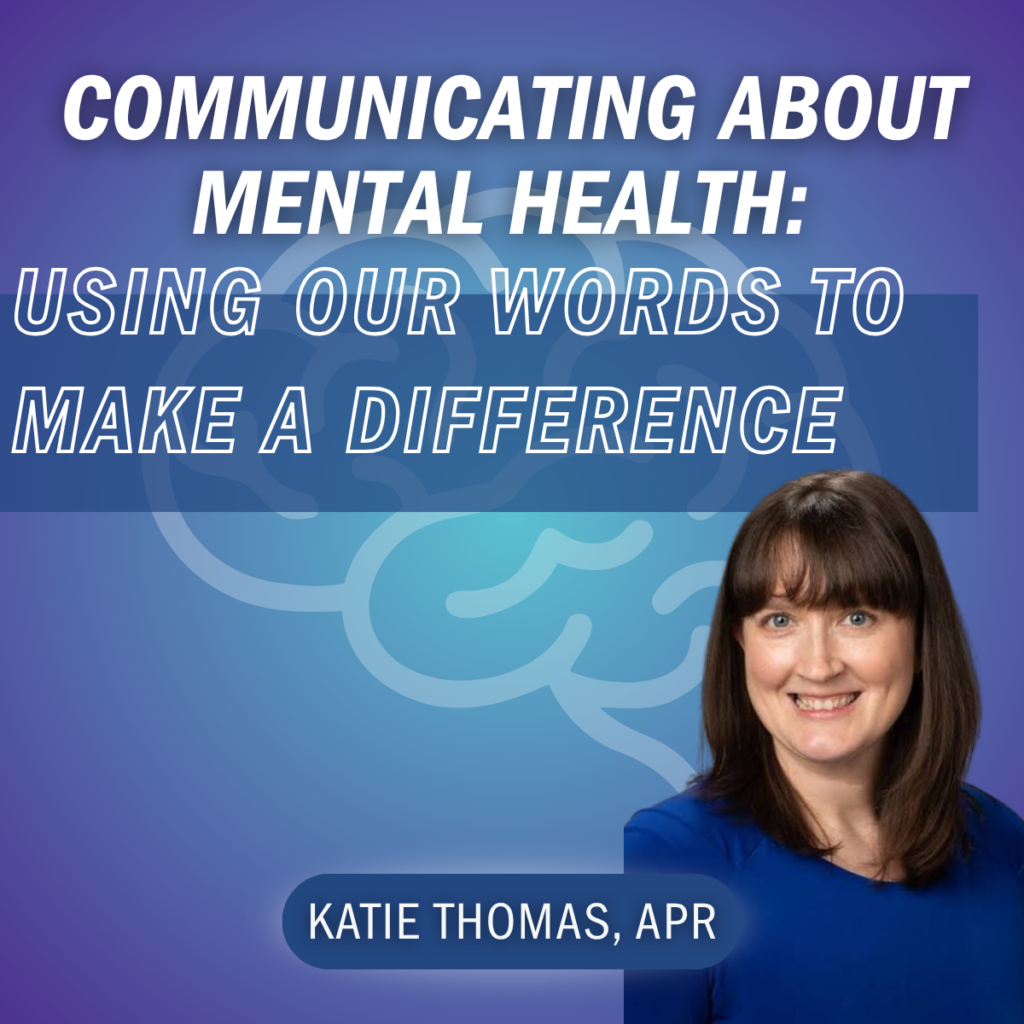
Katie Thomas, APR, is the Director of Population Health Marketing at Nationwide Children’s Hospital and National Director of Content and Educational Partnerships at The Kids Mental Health Foundation. Katie leads marketing and communication for two strategic plan accelerators: behavioral and population health.
Katie also serves as the National Professional Adviser for PRSSA and a mentor for students locally. She has received numerous honors, including PR News’s Top Women in Communications & PR, Public Relations Student Society of America’s (PRSSA) Hall of Fame, the Tom Poling Practitioner of the Year award, the Walt Seifert Award for Outstanding Service to Central Ohio PRSA and Columbus Business First’s 40 Under 40 and Women of Influence.