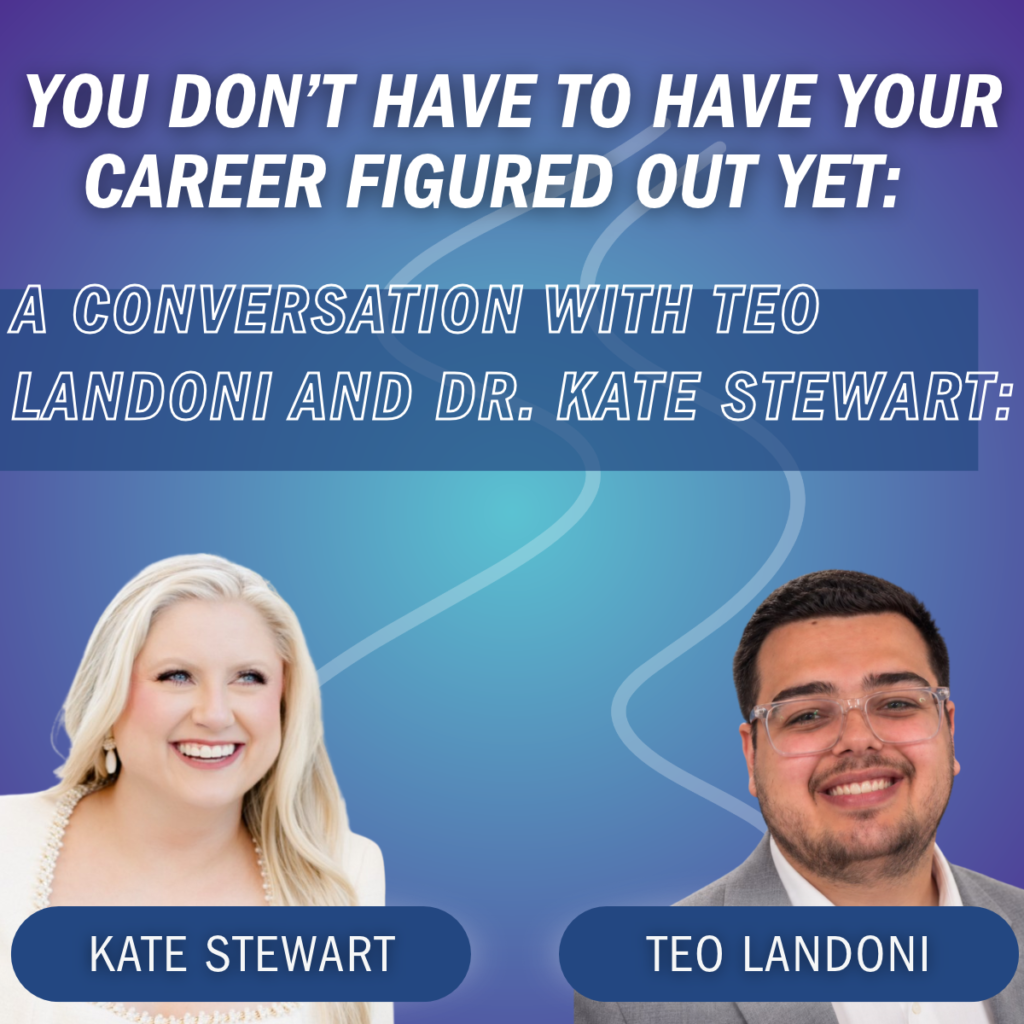
You Don’t Have to Have Your Career Figured Out Yet: A Conversation with Teo Landoni and Dr. Kate Stewart
If there’s one thing I’ve learned from talking to people in PR, it’s that almost no one’s career looks exactly like they thought it would when they were in college.
That was one of the things that stood out to me most when I talked with Kate Stewart, who holds a doctorate in journalism and mass communication with a focus in public relations. Stewart has worked in the PR industry, gone through both a master’s and a Ph.D. and now teaches students while continuing to stay connected to the industry. So, naturally, I wanted to know: How do you figure out what you actually want to do, and what happens when you’re not as confident as everyone thinks you are?
Her answer was pretty simple: You figure it out by doing things.
Try things before deciding what you want
One of Kate’s biggest pieces of advice for students was to get as much experience as possible in different areas of PR.
She had four internships before graduating from collegel, including experiences that helped her realize what she didn’t want to do. One internship involved writing blog posts every day, and she quickly realized that wasn’t for her. She also interned in sports, something she loved, but learned that she wanted sports to remain more of a hobby than a career.
I think that’s something students sometimes forget. An internship doesn’t have to confirm that you found your dream job. Sometimes, the most valuable thing you can learn is that you don’t want to do something.
Kate put it pretty well: “You just have to figure out what you like doing because you want to wake up every day and love your job.”
And PR gives us a lot of room to figure that out. Social media, influencer marketing, entertainment, sports, technology, food, nonprofit work, corporate communications — there are so many directions you can take your degree. You don’t have to pick one immediately.
Grad school teaches you more than what’s in the classroom
Kate knew pretty early that she wanted to get a Ph.D. and become a professor, so she went directly from undergrad into graduate school. At the same time, she continued working in the industry throughout both her master’s and Ph.D.
That combination ended up being one of the most valuable parts of her experience. For Kate, graduate school wasn’t just about learning more information. It taught her how to think differently. She described having to think about the “long game” through research papers and semester-long projects, while also learning how to manage teaching, work and everything else happening at the same time.
But there was another side of that experience that I think is especially relevant for students: confidence.
Kate told me that she didn’t really experience imposter syndrome until after graduating from undergrad. She already had two years of work experience, but when she entered her master’s program and found herself surrounded by people who were older and had more experience, she started questioning what she knew.
Her advice was something that sounds obvious, but is much harder to actually do: believe in yourself and what you know. Know what you’re good at. Find ways to show those strengths. And when you find something you don’t know, use your professors, mentors, coworkers and network to learn it.
You don’t have to know everything. You just have to be willing to keep learning.
Your network isn’t just the people above you
We talk about networking constantly in college. Go to the event. Connect on LinkedIn. Send the coffee chat email. But something Kate and I both talked about was the importance of looking around you, too.
Some of the people who can help you the most are going through the same things you are. Your classmates, friends, recent graduates and young professionals can give you a different kind of perspective because they were in your position recently.
Kate told me that when she connects her students with professionals, she often tries to find people who are five years or less removed from the experience they’re asking about. If a student is interviewing for an internship, for example, someone who recently went through that process can explain what it was actually like — something companies don’t always tell you.
That kind of information matters. And it doesn’t have to be complicated. Share an event with someone. Send them a job posting. Tell a friend about an opportunity. Introduce two people who should know each other. You don’t have to be a senior executive to help someone else.
Start building your name before you need it
Another part of our conversation that stuck with me was personal branding. Kate created her own website and personal brand when she was a sophomore in college. Today, she believes students should start building that presence even earlier, and I agree.
Your professional identity shouldn’t start the day you graduate. Your LinkedIn, portfolio, work samples and the things you share online are already becoming part of your professional reputation.
That doesn’t mean everything has to look corporate or overly polished. In fact, Kate talked about using Barbie-pink in her branding and even making her resume scented at PRSSA job tables. The point wasn’t the pink or the perfume. It was finding a way to make people remember her and, more importantly, making her professional presence feel like her.
There are a lot of talented students and young professionals out there. Being good at what you do matters, but people also need to know who you are.
You’re allowed to change your mind
I think that’s ultimately what I took away from my conversation with Kate.
You can change your mind about your internship. You can change your area of PR. You can decide to go to grad school — or decide that it isn’t for you. You can realize that the thing you thought was your dream job isn’t actually what you want. That doesn’t mean you’re behind. It means you’re figuring it out.
Kate’s advice to her younger self was that there will always be people who doubt you. Some will say it out loud, and some won’t. But you can’t become one of those people yourself.
So try things. Ask questions. Reach out to people. Build your portfolio. Take the internship even if you’re not sure. And if something doesn’t work out, take what you learned and keep going.
You don’t need to have your entire career figured out right now. You just need to keep moving.
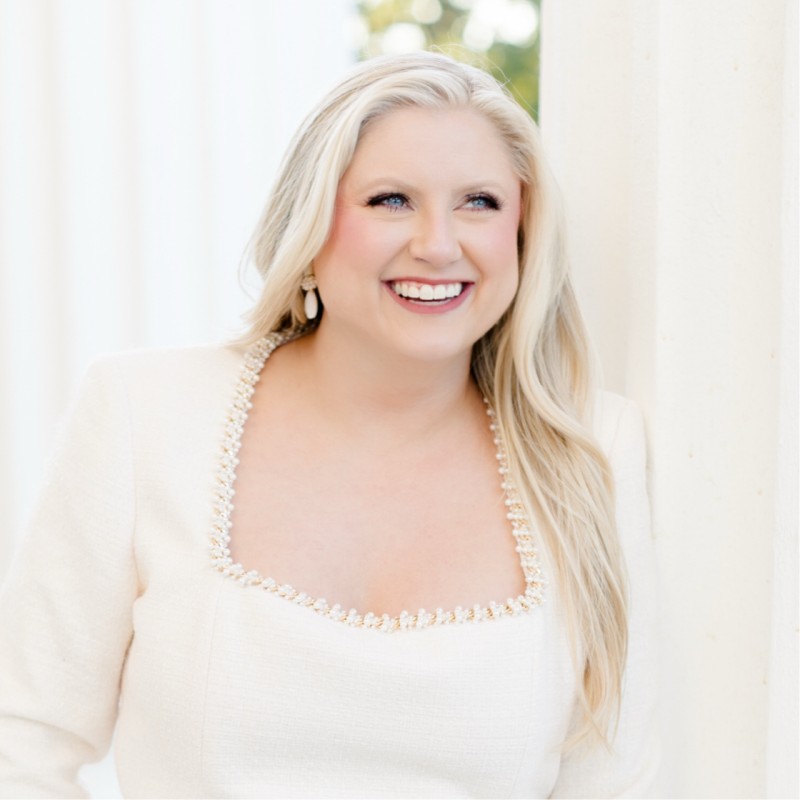
Kate Stewart, Ph.D., is an Assistant Public Relations Professor at Jacksonville State University. Her primary goal is to educate and foster relationships with the next generation of strategic communicators, disruptors, and leaders by making a positive impact, enriching the lives of the younger generations, helping them achieve their goals, and adequately equipping them with the knowledge and skills needed to succeed. Kate earned her Ph.D. in Mass Communication from the University of South Carolina in August 2024. Her dissertation, Fan, Friend, Or Foe: An Exploratory Scale Development of Perception of Social Media Influencers on Instagram, established a new amalgamated scale and theoretical implications directly impacting the academic and professional areas of the influencer ecosystem.
Kate’s university service includes serving on the College of Business and Industry Department of Communication Assessment Subcommittee and Public Relations and Advertising Curriculum Subcommittee. She is also the Assistant Editor of Digital Media and Social Media for the Journal of Public Relations Education and the 2024 Public Relations Society of America Educator’s Academy Communications Chair. Kate also continues serving with the Association of Education in Journalism and Mass Communication Public Relations Division by being on the Teaching Committee and Professional Freedom and Responsibility Committee for the 2023-2024 academic year.
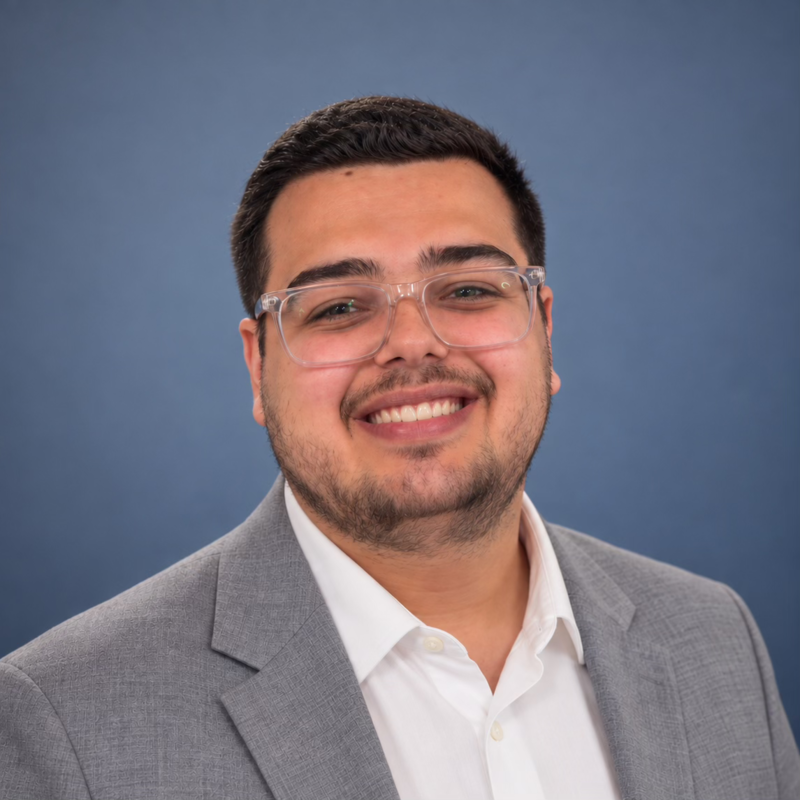
Teo Ignacio Landoni (he/him) is a graduate in Public Relations and Institutional Communications from Universidad Argentina de la Empresa (UADE) and is currently pursuing an M.A. in Public Relations and Advertising at DePaul University. He serves as the PRSSA International President and as an Operations Adviser for EntrePuentes.
Previously, Teo served as Vice President of Chapter Development on PRSSA’s International Committee, where he supported Chapter growth, strengthened leadership pipelines, and expanded opportunities for students across the organization. He also worked as an Account Executive at Moscú Comunicación + DATA, leading communications and branding strategies for brands within Pernod Ricard, and as an Executive Assistant at EY.
Committed to volunteer work since his high school years, Teo served as Youth and Volunteer Workforce Coordinator at Argentine Red Cross in his hometown and contributed to global initiatives such as the International Federation of Red Cross and Red Crescent Societies (IFRC) Data Playbook.
Teo is passionate about building strong teams, connecting people across borders, and creating meaningful, sustainable impact through communication and thought leadership.